
News
Latest
6,195 SEK
3,195 SEK
730 SEK
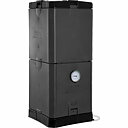
2,400 SEK
The masks stimulate the compost process
Shavings the material and provides a more nutritious mold. In household composts with ground contact, the worms look for themselves, without the containers being called masks compost for that reason. The very concept of masks compost is usually reserved for household composts that work with relatively low temperatures. If the temperature in a well-insulated household compost the active part is above 30 ° C, often far above, it should be in the mesh compost no more than 30 ° C. The mesh compost can keep the lower temperature by having a thinner insulation and a larger volume in relation to the amount of compost material supplied.
At the Swedish market there is currently only one compost container which is stated to be mascot compost (see the Mullbanks, Villamulle in the book). In a rotating container it is not as natural to find a mask as it is in a portrait because it lacks ground contact, but also because the temperature is often far too high for the worms in a rotating container. Therefore, you should not actively add mask to one. The risk is that the worms that are unable to escape will die.
Mask compost indoors
A mask compost can also be a smaller container, no more
bulky than it can fit indoors. One can be bought,
but is also easy to manufacture yourself from stackable trays or boxes.
They should hold at least 25-30 liters. If they are too small, it may be difficult to maintain a smooth and good function in the compost.
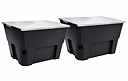
Two slopes. Use at least two piles stacked on top of each other. The should have holes in the bottom so that the worms can wander between them. For To avoid leakage of leachate water they should stand on a tray or the like.
Cover the compost with a lid of suitable material. The composting starts in one of the slopes and continues in the other when the first one is filled.
Newspaper, soil and worms. Start with some crumpled, moistened newspaper pages, some soil and worms. The soil may be a compost soil. If you look for, you see that the worms creep into the paper and enjoy it. The initial news paper procedure does not have to be repeated. The worms can become confused when placed in a new environment. The first few days, they can therefore get out of the compost and end up in crazy places. Therefore, add the lid lightly in the beginning so that it becomes bright in the slope, then they creep into the compost material.
In the future, they stay on the slopes.
Smaller pieces and power materials.
Since the compost material must be broken down by microorganisms before the worms can benefit from it, it is good if you disintegrate it into smaller pieces before placing it in the compost. This makes it available faster to the fortunes. Start with a maximum of 5 deciliters of material per week and gradually increase the amount as the amount of worms increases, up to 1-2 liters. If it becomes too large, it is possible that the compost process will become so violent that the temperature in the compost becomes too high.
Then the worms will be able to escape, and the drying death will be encountered on the floor. Supplement with a little power material so that no problems arise.
Sawdust or fine paper can be used as power material.
Cover the mulch.
Cover the material with a damp daily newspaper, it will eventually become part of the compost mass. The magazine keeps the surface moist and keeps small flies away. At a preschool, where the children will be able to see the worms without the worms being disturbed by the fact that the compost is moved, it is also a good way to be able to show the worms. A bunch of worms usually always reside during the newspaper.
Drain.
When both slopes are full, the bottom slope is placed,
the one to be emptied at the top. Most of the worms have left that slope to find their way up the other slope, where then there is most useful material, ie material that has not yet been broken down. Even the worms that are left in the back to be emptied will search down the other hill, if you first touch a little on the surface before emptying. Remove a few centimeters, wait a while and then remove a few centimeters again, repeat the procedure. The worms then feel that danger threatens from the surface and seeks down.
The mask roll contains more nutrients than regular compost and should therefore, dilute with at least the same amount of soil that is usually recommended for the compost soil, ie 1 part mole of 3–5 parts of soil.
Mask in regular compost container
Also in a double-bottomed container like Cipax (see p. 36) wanders it often comes in mask, although the bottom bottom towards the ground is complete close. Since the worms do not thrive at a temperature higher than 30 ° C
they reside in the bottom layer of the container and more rarely in tangible, active, and therefore warmest, layer of the compost mass.
Occasionally, however, it can be seen that the mask is also on
the upper walls of the compost. It depends on temperature variations in it active layer. When the temperature is lower than 30 ° C, worms can also look up there. If the temperature again exceeds the critical limit, the worms flee to areas with a more comfortable temperature, many fly down to cooler parts of the compost, while some seek
Shavings the material and provides a more nutritious mold. In household composts with ground contact, the worms look for themselves, without the containers being called masks compost for that reason. The very concept of masks compost is usually reserved for household composts that work with relatively low temperatures. If the temperature in a well-insulated household compost the active part is above 30 ° C, often far above, it should be in the mesh compost no more than 30 ° C. The mesh compost can keep the lower temperature by having a thinner insulation and a larger volume in relation to the amount of compost material supplied.
At the Swedish market there is currently only one compost container which is stated to be mascot compost (see the Mullbanks, Villamulle in the book). In a rotating container it is not as natural to find a mask as it is in a portrait because it lacks ground contact, but also because the temperature is often far too high for the worms in a rotating container. Therefore, you should not actively add mask to one. The risk is that the worms that are unable to escape will die.
Mask compost indoors
A mask compost can also be a smaller container, no more
bulky than it can fit indoors. One can be bought,
but is also easy to manufacture yourself from stackable trays or boxes.
They should hold at least 25-30 liters. If they are too small, it may be difficult to maintain a smooth and good function in the compost.
Two slopes. Use at least two piles stacked on top of each other. The should have holes in the bottom so that the worms can wander between them. For To avoid leakage of leachate water they should stand on a tray or the like.
Cover the compost with a lid of suitable material. The composting starts in one of the slopes and continues in the other when the first one is filled.
Newspaper, soil and worms. Start with some crumpled, moistened newspaper pages, some soil and worms. The soil may be a compost soil. If you look for, you see that the worms creep into the paper and enjoy it. The initial news paper procedure does not have to be repeated. The worms can become confused when placed in a new environment. The first few days, they can therefore get out of the compost and end up in crazy places. Therefore, add the lid lightly in the beginning so that it becomes bright in the slope, then they creep into the compost material.
In the future, they stay on the slopes.
Smaller pieces and power materials.
Since the compost material must be broken down by microorganisms before the worms can benefit from it, it is good if you disintegrate it into smaller pieces before placing it in the compost. This makes it available faster to the fortunes. Start with a maximum of 5 deciliters of material per week and gradually increase the amount as the amount of worms increases, up to 1-2 liters. If it becomes too large, it is possible that the compost process will become so violent that the temperature in the compost becomes too high.
Then the worms will be able to escape, and the drying death will be encountered on the floor. Supplement with a little power material so that no problems arise.
Sawdust or fine paper can be used as power material.
Cover the mulch.
Cover the material with a damp daily newspaper, it will eventually become part of the compost mass. The magazine keeps the surface moist and keeps small flies away. At a preschool, where the children will be able to see the worms without the worms being disturbed by the fact that the compost is moved, it is also a good way to be able to show the worms. A bunch of worms usually always reside during the newspaper.
Drain.
When both slopes are full, the bottom slope is placed,
the one to be emptied at the top. Most of the worms have left that slope to find their way up the other slope, where then there is most useful material, ie material that has not yet been broken down. Even the worms that are left in the back to be emptied will search down the other hill, if you first touch a little on the surface before emptying. Remove a few centimeters, wait a while and then remove a few centimeters again, repeat the procedure. The worms then feel that danger threatens from the surface and seeks down.
The mask roll contains more nutrients than regular compost and should therefore, dilute with at least the same amount of soil that is usually recommended for the compost soil, ie 1 part mole of 3–5 parts of soil.
Mask in regular compost container
Also in a double-bottomed container like Cipax (see p. 36) wanders it often comes in mask, although the bottom bottom towards the ground is complete close. Since the worms do not thrive at a temperature higher than 30 ° C
they reside in the bottom layer of the container and more rarely in tangible, active, and therefore warmest, layer of the compost mass.
Occasionally, however, it can be seen that the mask is also on
the upper walls of the compost. It depends on temperature variations in it active layer. When the temperature is lower than 30 ° C, worms can also look up there. If the temperature again exceeds the critical limit, the worms flee to areas with a more comfortable temperature, many fly down to cooler parts of the compost, while some seek

575 SEK