
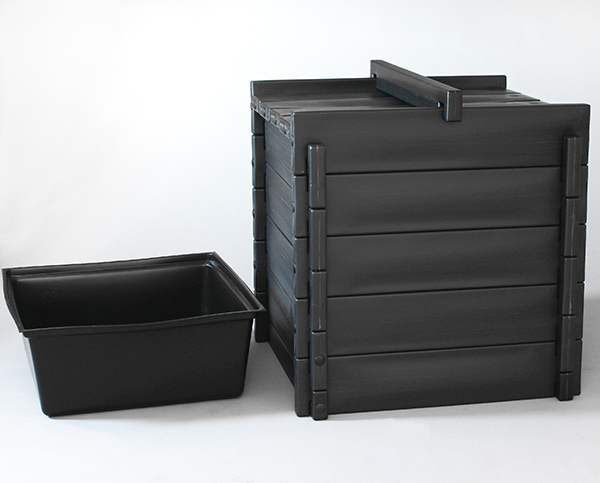
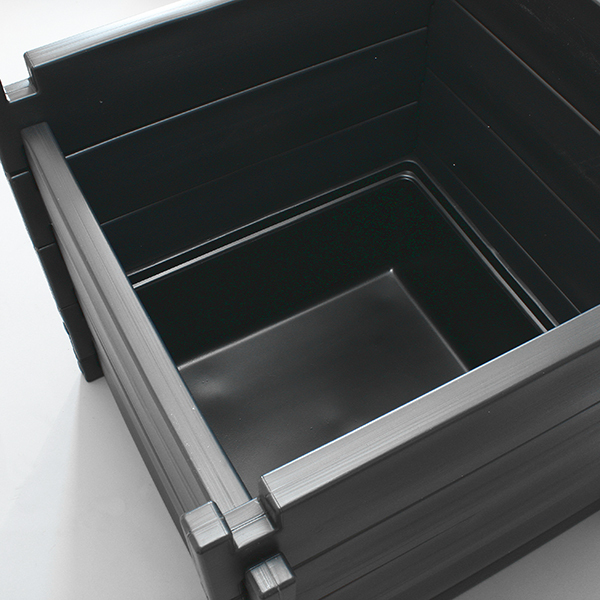
Latrine bottom to biokub
1,020 SEK
- Secure payment by card
- E-mail us, we reply swiftly!
- Do you need help call +46 8 48 00 15 20
- Only 99 SEK in shipping fee within Sweden per order below 3 000 SEK. Additional freight cost may apply if expressly stated at an article
Description
Article no.: san54080705
Composting Latrine
To eliminate high collection costs, stimulate Today, many municipalities make their holiday home owners compost latrine too. The environment gains on reduced transport while the residents receive lower costs and a good soil improver.
Latrine composts require the same conditions as household or garden composts to keep the process running, ie oxygen, nutrition, moisture and heat.
When the latrine compost is to be started, the dense bottom tray should be filled with about 20-25 cm peat moss to absorb the moisture present in the latrine.
Kitchen waste and garden waste can also be supplied with advantage. Expect that in a latrine compost, the least is needed twice as much litter as the latrine for the decomposition to work, unless you have a so-called separation toilet where the urine is led away. In that case, the amount of current can be reduced considerably.
When the container is full, it is important that it is allowed to stand at least 6, preferably up to 12 months in order for unwanted organisms to be rendered harmless. This may mean that there are households that need two Biokubs.
To eliminate high collection costs, stimulate Today, many municipalities make their holiday home owners compost latrine too. The environment gains on reduced transport while the residents receive lower costs and a good soil improver.
Latrine composts require the same conditions as household or garden composts to keep the process running, ie oxygen, nutrition, moisture and heat.
When the latrine compost is to be started, the dense bottom tray should be filled with about 20-25 cm peat moss to absorb the moisture present in the latrine.
Kitchen waste and garden waste can also be supplied with advantage. Expect that in a latrine compost, the least is needed twice as much litter as the latrine for the decomposition to work, unless you have a so-called separation toilet where the urine is led away. In that case, the amount of current can be reduced considerably.
When the container is full, it is important that it is allowed to stand at least 6, preferably up to 12 months in order for unwanted organisms to be rendered harmless. This may mean that there are households that need two Biokubs.
Files and media
 | Product sheet_SV |